Farm and acreage parcels
The dominant product — homes on five to fifty-plus acres, often with outbuildings and pasture.
Incorporated 1998
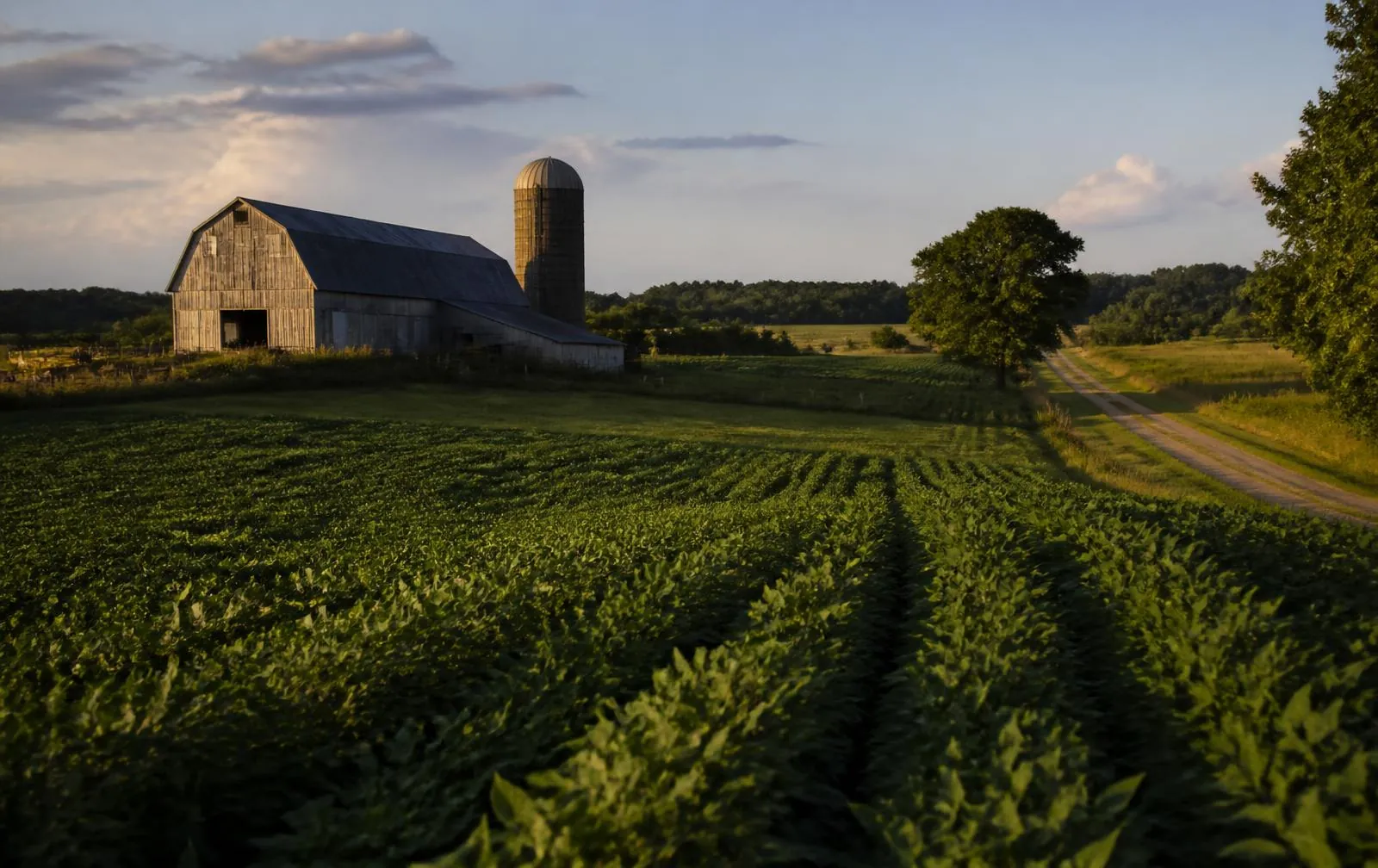
Union County's agricultural north — farmland, large parcels and a town government that has kept density low while the county's southern half filled in.
Population
≈ 7,200 residents
Median Price
≈ $430K median home price
Incorporated
1998
ZIP
28110 / 28079
Unionville is what southern Union County looked like thirty years ago. It incorporated in 1998, largely to give residents control over land use as Monroe and Indian Trail expanded toward them, and the result is a town of working farms, church cemeteries, long road frontages and very little subdivision development.
It rarely appears in relocation searches, which is exactly why it is worth documenting: for buyers who want acreage, barns and genuine agricultural neighbours within a reasonable drive of the corridor, Unionville offers land at prices the Waxhaw and Marvin markets no longer contain.
The trade-off is distance and services. Groceries, hospitals and schools are in Monroe or Indian Trail, and Charlotte commutes run longer than from anywhere else in this guide.
Character
Housing Stock
The dominant product — homes on five to fifty-plus acres, often with outbuildings and pasture.
Buyers frequently purchase raw acreage and build, a path largely closed in the southern corridor.
Brick ranches and traditional homes on large lots along the town's main roads.
A limited number of low-density neighborhoods, mostly near the Monroe and Indian Trail edges.
Schools
Union County Public Schools serves Unionville, most commonly through the Unionville Elementary, Piedmont and Porter Ridge attendance areas depending on address.
Piedmont High and Porter Ridge High are the usual high school assignments — different campuses from the Marvin Ridge and Cuthbertson schools that define the southern corridor.
Assignment is address-specific and should be confirmed with the district before purchase.
Getting Around
Neighborhoods
Acreage homesites and farms along the town's main artery.
Rural parcels near the river corridor on the town's northern edge.
Historic rural community with farmland and churches.
What people ask
The questions below are the ones actually typed into search about Unionville — answered without hedging, and with the tradeoffs left in.
Union County's agricultural north — farmland, large parcels and a town government that has kept density low while the county's southern half filled in. In practice, Unionville, NC suits households that want Union County tax rates, the Union County Public Schools assignment and a median price around $430K median home price. The honest tradeoff is that everything here is driven by a car — the corridor rewards space and schools over walkability, with the exception of the historic downtown pockets.
Housing is the variable that matters: Unionville runs at approximately $430K median home price, against a corridor that spans restored cottages to multi-million-dollar gated estates. Union County's effective property tax rate sits among the more favorable in the Charlotte metro. Groceries, utilities and insurance track regional averages; the real line items to model are commute fuel, association dues and, for larger lots, well and septic maintenance.
10–15 minutes south — the nearest full-service town, hospital and courthouse.
The Unionville median sits at approximately $430K median home price, but that single number hides most of the story. The dominant product — homes on five to fifty-plus acres, often with outbuildings and pasture. Compare within a feeder pattern and lot size before assuming a town premium explains a price gap.
The named neighborhoods buyers ask about most are Unionville-Indian Trail Road corridor, Rocky River area, Olive Branch. Each is set out street by street — architecture, lot size, association structure and school assignment — on the Unionville neighborhoods page.
Union County Public Schools: Unionville Elementary feeding Piedmont Middle and Piedmont High in northern Union County. Assignment is set at the parcel level and changes with redistricting, so verify a specific address rather than trusting a neighborhood name.
≈ 7,200 residents The town was incorporated in Incorporated 1998. Growth in this part of the region has consistently outrun road and classroom capacity, which is why attendance lines and intersection projects are revisited every few years. Buyers holding for a decade should read current land-use plans, not just current conditions.
Neither wins outright. Waxhaw brings the corridor's only genuinely walkable historic downtown and the deepest gated-estate inventory; Unionville brings agriculture is still a working land use here, not a landscape feature — row crops, poultry, hay and livestock operations all remain. Run both against your own three constraints — commute, school pattern, and lot — and the answer usually stops being close.
Real estate
Discover Waxhaw is an editorial guide and publishes no listings. Live inventory for Unionville and the rest of the corridor is published through Canopy MLS and carried on the licensed brokerage and builder sites below. Start with the segment guides, then verify every address-specific item on the parcel record.
Listings
Peters & Associates publishes current luxury inventory across Unionville and the greater Charlotte region. Brokerage profile →
Building
Peters Custom Homes builds ground-up custom and estate homes in this corridor. Builder profile →
Finishing
Emerald & Oak handles interior design and furnishings for new builds and renovations. Studio profile →
Everyday Life
Questions
Unionville is in northern Union County, immediately north of Monroe and east of Indian Trail, roughly thirty to forty minutes from Waxhaw.
It is one of the few places left in Union County where sizeable agricultural and residential acreage still trades regularly, at prices well below the southern corridor. Buyers should verify well, septic, soil and any use-value tax status before committing.
Union County Public Schools — typically the Unionville Elementary, Piedmont and Porter Ridge attendance areas, not the Marvin Ridge or Cuthbertson catchments.
Generally 45 to 60 minutes to uptown via US-74 and I-485, the longest of the towns covered in this guide.